4WD SUSPENSION LIFT KITS IN NEWCASTLE
If you are serious about getting more out of your 4WD, a suspension lift kit is where it all starts. At Opposite Lock Cardiff, we stock lift kits from the brands that matter, and we help you pick the one that suits your vehicle, your budget and how you actually drive. We serve 4WD owners across Newcastle, Cardiff, Maitland, Rutherford, Hunter Valley, Central Coast, Port Stephens and Nelson Bay. Whether you are building a serious off-road rig or just want better clearance for everyday driving, we have a kit for you.
4WD Suspension Lift Kit Brands We Stock
We only stock suspension lift kit brands we trust. Every kit we sell has been chosen because it performs in real Australian conditions, not just on paper.

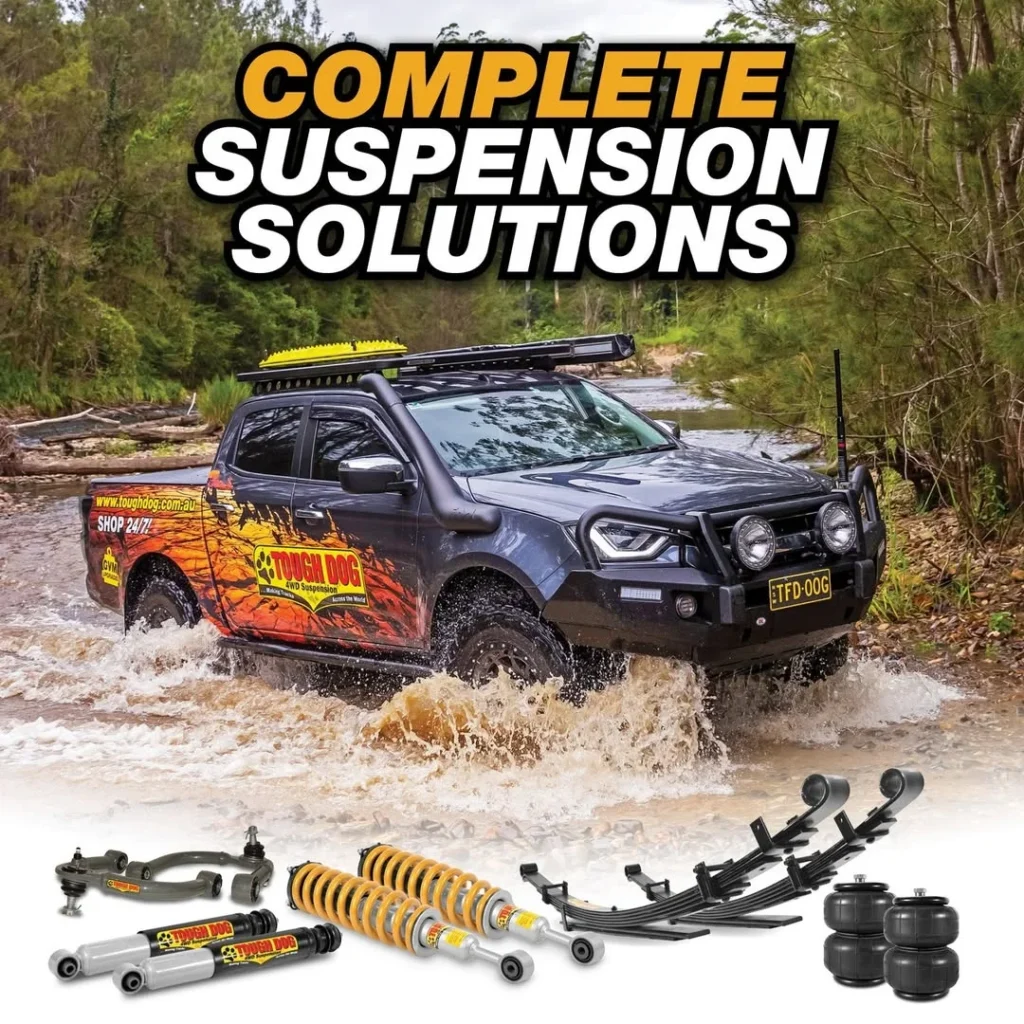
Tough Dog is one of Australia’s most recognised suspension brands. Their kits are engineered for the demands of local terrain, from beach tracks to high-country corrugations. We stock a full range of Tough Dog lift kits to suit popular 4WD models across the Newcastle region.

Outback Armour builds suspension systems around touring comfort and load capacity. Their kits are a popular choice for drivers who spend time on long hauls through places like the Hunter Valley or up the coast toward Port Stephens.

Fulcrum offers lift kits that balance ride comfort with off-road capability. They are a solid option for drivers who want improved performance without sacrificing day-to-day drivability around Newcastle or Maitland.
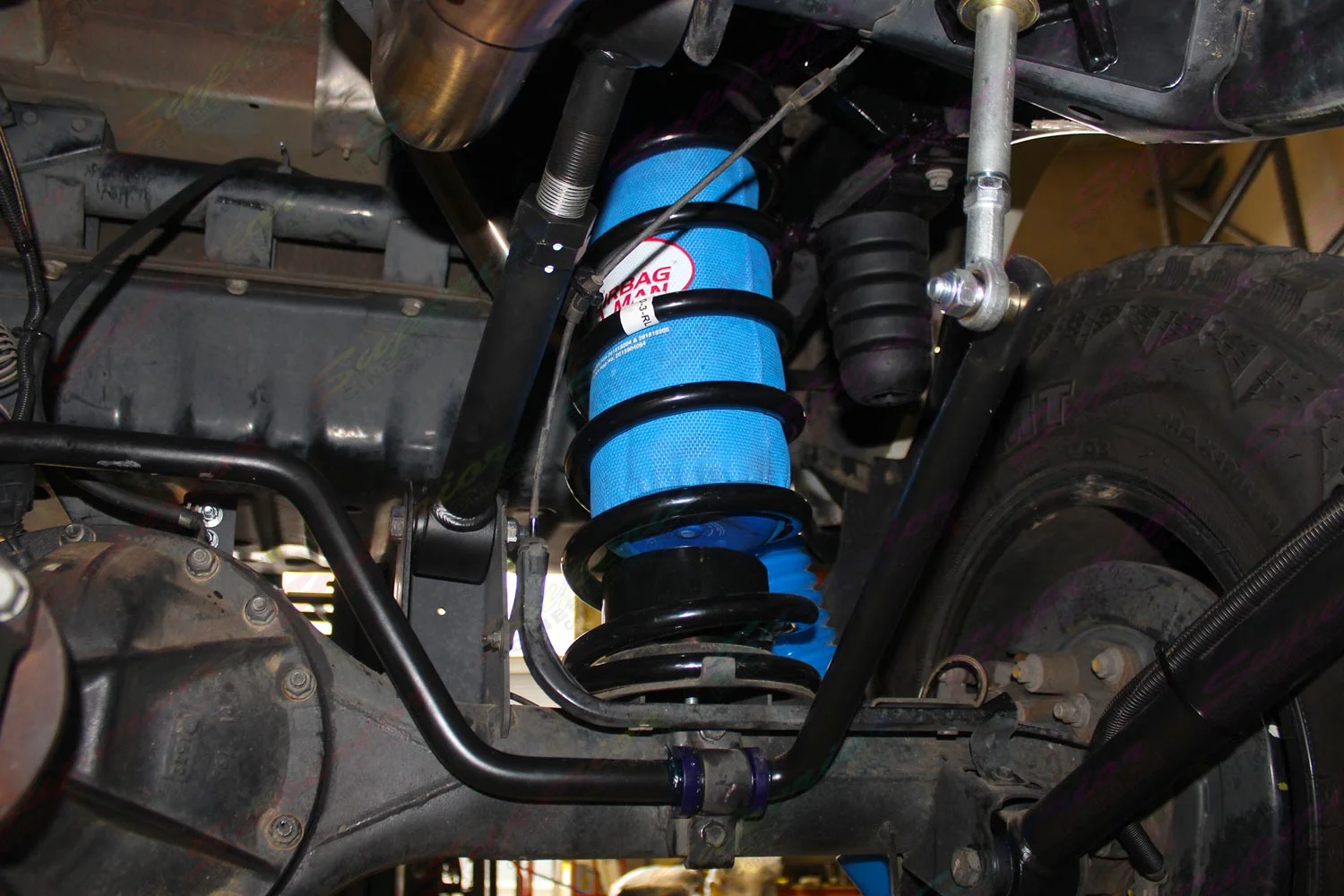
Airbag Man systems are the go-to for towing and load support. If you regularly carry a heavy tray, tow a caravan or haul gear for work, an Airbag Man kit gives you the stability and control you need.
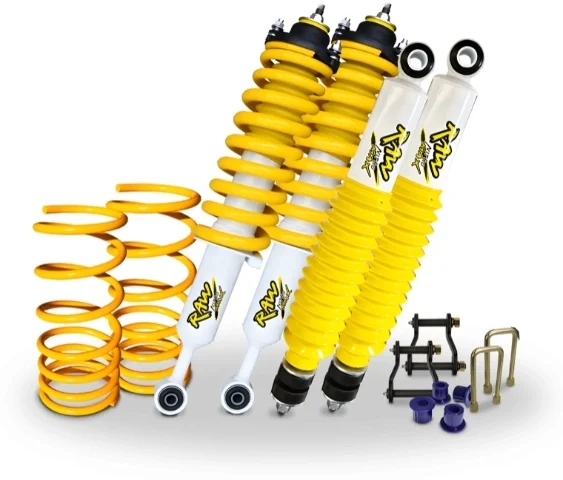
Raw 4×4 kits are built for drivers who push their vehicles hard. If you are regularly tackling rough terrain around the Hunter Valley or heading further afield, Raw 4×4 delivers the durability and performance to back you up.

Roadsafe produces quality suspension components that are well priced and widely compatible. A reliable choice for drivers who want a quality lift without going overboard on cost.

Dobinsons has been making suspension components in Australia for decades. Their kits offer excellent articulation and are well suited to vehicles that carry heavy loads or tow regularly.

Why Install a Suspension Lift Kit on Your 4WD?
A lift kit does more than raise your ride height. Here is what changes once you fit one to your 4WD.
- Better Ground Clearance: More clearance means fewer scraped diff covers and less chance of getting hung up on rocks, logs or rough tracks.
- Room for Bigger Tyres: A lift opens up space for larger off-road tyres, which grip better on loose surfaces and give your 4WD a more capable stance.
- Improved Off-Road Capability: With more suspension travel and better geometry, your 4WD handles uneven ground with far more confidence.
- Stronger Towing and Load Performance: The right kit improves stability under load, which matters when you are towing a boat or caravan on highway runs or through hilly terrain.
- Better Look: A lifted 4WD simply looks the part. It is a practical upgrade that also improves the overall presence of your vehicle.
How to Choose the Right Lift Kit for Your Vehicle?
Not every lift kit suits every vehicle or driving style. Here are the key things to consider before you choose.
- Lift Height: A 2 inch lift is the most common choice for daily drivers and light off-roaders. It improves clearance without requiring major modifications. For serious off-road builds, a 3 to 4 inch lift gives you more travel and the ability to run significantly larger tyres.
- How You Use Your 4WD: A touring setup built for long distance highway runs needs different suspension characteristics compared to a vehicle that spends weekends on rough tracks around the Hunter Valley. Tell us how you drive and we will match you to the right kit.
- Your Vehicle’s Load Requirements: If you regularly tow or carry heavy loads, you need a kit that is rated to handle it. Airbag Man and Outback Armour both offer strong options for load-rated builds.
- NSW Legal Requirements: In New South Wales, lift kits up to 2 inches generally do not require engineering certification. Lifts beyond that may need compliance checks depending on the vehicle and the extent of the modification. Some builds that involve significant payload increases may also benefit from a GVM upgrade to stay within legal load ratings. Our team keeps up to date with current NSW regulations so your build stays road legal.
Not sure which direction to go? Visit our 4×4 workshop in Cardiff and talk to our team. We have been fitting lift kits to 4WDs in Newcastle for over a decade and we will give you a straight answer.
Lift Kits for Popular 4WD Models
We stock and fit lift kits for a wide range of popular 4WD models including the Toyota HiLux, Toyota LandCruiser 70, 200 and 300 Series, Toyota Prado, Ford Ranger, Ford Everest, Isuzu D-Max, Mazda BT-50, Mitsubishi Triton, Nissan Navara, Nissan Patrol and Volkswagen Amarok.
Not seeing your vehicle? Get in touch and we will track down the right kit for you.
- Toyota HiLux
- Toyota LC 70 Series
- Toyota LC 200 Series
- Toyota LC 300 Series
- Toyota Prado
- Ford Ranger
- Ford Everest
- Isuzu D-Max
- Isuzu MU-X
- Nissan Navara
- Nissan Patrol
- Mitsubishi Triton
- Mazda BT-50
- Volkswagen Amarok
- GWM Tank 300
- Dodge RAM 1500
We are currently running 50% off Airbag Man suspension installation at our Cardiff workshop. Book now to take advantage of this offer.
Frequently Asked Questions About Suspension Lift Kits
What is the difference between a spacer lift and a full suspension lift?
A spacer lift inserts blocks or strut spacers to raise ride height quickly and cheaply, but it does not improve suspension travel or ride quality. A full suspension lift replaces or upgrades the shocks, springs and sometimes control arms, giving you better articulation, improved comfort and more capable handling on rough terrain.
Are suspension lift kits legal in New South Wales?
Yes. Lifts up to 2 inches are generally accepted in NSW without engineering certification. For lifts above that, additional compliance checks may apply depending on the vehicle and the extent of the modification. Our team handles this regularly and will make sure your build meets current NSW requirements.
Will a lift kit affect my fuel economy?
A modest lift has a minimal impact on fuel use. Running larger, heavier tyres after a lift has more of an effect, particularly on highway driving. Most of our customers find the performance and capability gains are well worth the small trade-off.
Do I need a wheel alignment after fitting a lift kit?
Yes, always. Any change to suspension geometry requires a proper alignment to make sure your 4WD handles safely and your tyres wear evenly. A wheel alignment after fitting a lift kit is not optional and it is included as standard in every installation we carry out.
Can I fit larger tyres after lifting my 4WD?
Yes. A 2 inch lift typically gives you room for 32 to 33 inch tyres. A 4 inch lift can accommodate 35 inch tyres depending on the vehicle. Our team will advise on tyre sizing during your consultation.
What other parts might I need when lifting over 3 inches?
For lifts beyond 3 inches, you may need extended brake lines, caster correction kits, updated sway-bar links and steering angle adjustments. We assess your specific setup and include any necessary components in the build.
How do I choose between Tough Dog, Dobinsons and Outback Armour?
It comes down to how you use your 4WD. Tough Dog is a strong all-rounder. Dobinsons excels for heavily loaded touring builds. Outback Armour is well regarded for long-distance comfort. Come in for a chat and we will help you decide based on your actual driving needs.
Ready to lift your 4WD? Talk to the team at Opposite Lock Cardiff. We will help you choose the right kit for your vehicle and driving needs. Once you have made your choice, our professional lift kit installation in Newcastle ensures everything is fitted correctly, aligned and road ready. Call us on (02) 4058 1911 or get a free quote online.
At Opposite Lock Cardiff, we are committed to helping you get the most out of your 4WD. Whether you’re looking to improve off-road performance, increase ground clearance, or enhance your vehicle’s appearance, our expert team is here to help. Contact us today to book your suspension lift kit installation and elevate your 4WD experience.
We are currently offering free lift kit installation on selected kits. Check our current offer before you book.
- Visit Opposite Lock Cardiff for 4x4 Lift Kits in Newcastle, NSW